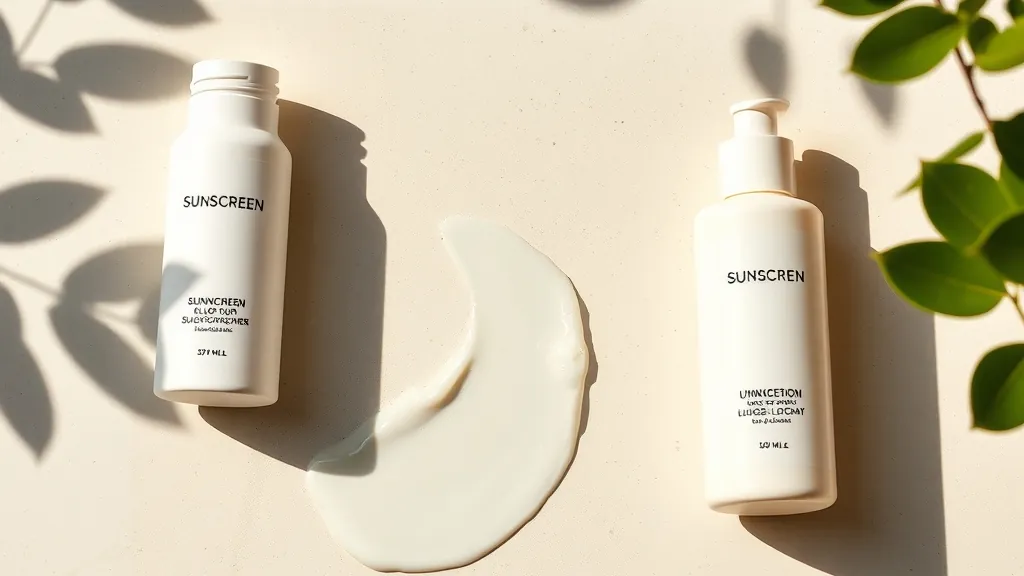
Product review
ISDIN Sunscreen (Eryfotona & Fusion Water MAGIC) Review
- Adeleke Yoshida
- 18 Nov, 2026
- Sunscreen
Our verdict
4.0 / 5
ISDIN sunscreen review: Eryfotona Actinica is 11% zinc oxide at about $0.91 per dose in the 3.4 oz; US Fusion Water MAGIC is a different, all-chemical formula.
Why we like it
- Eryfotona Actinica uses a single mineral active, 11% zinc oxide, in a thin fluid that's labeled water resistant for 40 minutes
- The 3.4 oz Actinica works out to about $0.91 per full-face dose at list price, under $0.80 with a retailer auto-replenish discount
- US Fusion Water MAGIC is $38 for 50 ml (about $0.95 per dose) and contains no oxybenzone or octinoxate
- Clear product split: a mineral line (Eryfotona) and a lighter chemical-filter daily option (Fusion Water MAGIC)
- Every US product carries a standard FDA drug facts panel, so the filters and percentages are easy to check
Think twice if
- Fragrance appears in the ingredient lists of Actinica, Ageless and US Fusion Water MAGIC, despite the sensitive-skin marketing
- The 'DNA Repairsomes' plankton extract sits near the end of the ingredient list, after fragrance, and the repair claim is hard to value
- The US Fusion Water MAGIC is SPF 40 with four chemical filters; it is not the European SPF 50 formula from travel videos
- Fusion Water MAGIC makes no water-resistance claim, so it's not a beach or gym sunscreen
- A Dermstore listing for the tinted Eryfotona Ageless gives two different titanium dioxide figures, so check the carton before you buy
If you’ve watched a European sunscreen haul, you’ve probably seen ISDIN’s Fusion Water MAGIC: a runny, fast-drying fluid that people buy by the armful in Spanish pharmacies. Then you come home, find “Fusion Water MAGIC” on ISDIN’s US site for $38, and assume it’s the same bottle. It isn’t. That gap between what people talk about online and what American shoppers actually get is what this review is about.
I’ve read a lot of sunscreen labels for this site, and ISDIN’s US range is a useful case study. On paper it’s a premium Spanish brand. On the US shelf it’s really two products: a zinc-only mineral sunscreen with a plankton-enzyme story (Eryfotona Actinica, plus the tinted Eryfotona Ageless), and a newer chemical-filter daily fluid that carries the famous European name. I’ll go through what’s in each, what it costs per application, and who should pick which.
This is an ingredient and value review, not medical or dermatological advice. Patch-test any new sunscreen, and talk to a dermatologist about sun protection if you have a skin condition or a history of skin cancer.
If you came here for the European Fusion Water MAGIC
Here’s the short version. The US Fusion Water MAGIC is SPF 40, and its FDA drug label lists four chemical filters: octocrylene 9%, homosalate 7.3%, octisalate 4.5% and avobenzone 2.7%. ISDIN’s own page describes it as broad spectrum with hyaluronic acid, a Mediterranean algae extract and vitamin E.
European versions of Fusion Water MAGIC have been sold at SPF 50 and can use newer UV filters that aren’t approved for sale in the US. The US list of allowed over-the-counter filters is much shorter than Europe’s, so any brand that sells in both markets has to rebuild the formula for America. That’s not a scandal, and the US version is a legitimate broad-spectrum sunscreen. But if the reason you wanted it was the European filter technology, the US carton doesn’t have it.
What the US version does have going for it:
- Price. $38 for 50 ml at list price on both ISDIN’s site and Dermstore. ISDIN was showing it at $26.60 on sale when I checked, and Dermstore’s auto-replenish price was $32.30.
- No oxybenzone or octinoxate. It isn’t covered by Hawaii’s ban on sunscreens containing those two filters.
- Texture claims I’d believe. The base is water, dimethicone and silica, the classic recipe for a thin fluid that dries to a soft, slightly powdery finish. ISDIN also claims no white cast and no pilling, which is plausible with no mineral filter in it.
What gives me pause: no water-resistance claim. The label tells you to use a water-resistant sunscreen when swimming or sweating. And all four of its filters are among those the FDA said in its 2019 proposed rule that it needed more safety data on. That doesn’t make them unsafe; they’re legal and widely used. It means the paperwork isn’t finished, and some people prefer to avoid them for that reason.
Eryfotona Actinica: the one ISDIN built its US reputation on
Actinica is the sunscreen dermatology offices tend to stock, and it’s a very different product.
One active ingredient: zinc oxide 11%. That’s it. No chemical filters, so it’s a true mineral sunscreen with SPF 50+, unlike some “mineral” bestsellers that quietly add octinoxate. Eleven percent is lower than many zinc-only sunscreens, which often run 15% to 25%, and that’s part of why it feels thin. The silicones and light esters near the top of the inactive list (diethylhexyl carbonate, dibutyl adipate, cyclopentasiloxane) do the rest.
Water resistant for 40 minutes. The directions say to reapply after 40 minutes of swimming or sweating, immediately after towel drying, and at least every two hours. For a mineral face fluid, that’s a genuinely useful spec, and it’s the main practical reason to choose Actinica over Fusion Water MAGIC.
The “DNA Repairsomes” claim, read from the label
ISDIN’s headline for Actinica is DNA Repairsomes, which it describes as naturally occurring enzymes that are clinically proven to repair existing sun damage. On the label, that’s plankton extract, a photolyase enzyme wrapped in liposomes (that’s the lecithin you’ll see beside it).
Here’s what the ingredient list says, in order, near the end:
…Tocopheryl Acetate, Glyceryl Stearate, Fragrance, Bisabolol, Disodium EDTA, Ethylhexylglycerin, Panthenol, PEG-8, Tocopherol, Lecithin, Plankton Extract, Ascorbyl Palmitate, Ascorbic Acid, Citric Acid.
Plankton extract sits after fragrance and after the preservative booster ethylhexylglycerin. Ingredients present at 1% or less can be listed in any order, so position doesn’t give you an exact amount. But a headline ingredient listed after the scent is a familiar sight to anyone who has priced raw materials. It usually means a small amount of an expensive active carrying a big claim.
Topical photolyase has been studied, but the published research is mostly small studies, and “repairs existing sun damage” is a marketing summary, not something you’ll see in the mirror. I’d judge Actinica as what it definitely is, a well-formulated 11% zinc sunscreen, and treat the enzyme as an unproven extra. If the Repairsomes story is the only reason it costs more than another mineral sunscreen you like, I wouldn’t pay for it.
The fragrance problem
Actinica is often recommended for sensitive skin, and its packaging says non-comedogenic. But “Fragrance” is in the inactive list, along with bisabolol (a chamomile-derived soothing ingredient). The tinted Ageless and US Fusion Water MAGIC list fragrance too.
This is the detail that surprised me most. If you’re buying a dermatology-office sunscreen specifically because your skin reacts to things, fragrance is one of the first ingredients to rule out. Nothing on the label says how much there is, and plenty of people wear Actinica with no trouble. Still, if fragrance has caused a reaction for you before, EltaMD UV Clear is fragrance-free, though it’s a hybrid rather than a mineral formula.
Eryfotona Ageless: the tinted option, with a labeling wrinkle
Ageless is ISDIN’s tinted mineral SPF 50, with iron oxides for color, bakuchiol, a peptide (palmitoyl tripeptide-38), sodium hyaluronate and the same plankton extract. It makes no water-resistance claim on the Dermstore listing.
There’s a wrinkle. Dermstore’s listing for the 3.4 oz names titanium dioxide as the active but gives two different percentages: 16.1% in the ingredient list and “10.7%” in the FAQ. Either way, a titanium-dioxide-based tint is fine for daily wear. But I won’t pick one figure when the retailer’s own page disagrees with itself. Read the drug facts on the carton, and if exact concentration matters to you, buy from ISDIN directly.
Bakuchiol and a peptide add to the anti-aging story. In a sunscreen you rinse off each night, I’d count them as minor extras, not a replacement for a serum.
What each one costs per application
SPF ratings are tested at 2 mg of product per square centimeter of skin, which for an adult face is commonly translated to about a quarter teaspoon, roughly 1.25 ml. Here’s the US line at that dose, using prices on ISDIN’s site and Dermstore checked November 18, 2026:
| Product | Size | List price | Full-face doses (~1.25 ml) | Cost per dose |
|---|---|---|---|---|
| Eryfotona Actinica SPF 50+ | 1.7 fl oz / 50 ml | $46.00 | ~40 | ~$1.15 |
| Eryfotona Actinica SPF 50+ | 3.4 fl oz / 100 ml | $73.00 | ~80 | ~$0.91 |
| Actinica 3.4 oz, Dermstore auto-replenish | 100 ml | $62.05 | ~80 | ~$0.78 |
| Eryfotona Ageless Tinted SPF 50 | 3.4 fl oz / 100 ml | $78.00 | ~80 | ~$0.98 |
| Fusion Water MAGIC SPF 40 (US) | 50 ml | $38.00 | ~40 | ~$0.95 |
| Fusion Water MAGIC, ISDIN sale price | 50 ml | $26.60 | ~40 | ~$0.67 |
Prices change often. Dermatology-office webshops I saw listed the 3.4 oz Actinica between about $62 and $73, so treat this table as a snapshot. A few things the math shows:
- The big Actinica bottle is about 21% cheaper per dose than the small one. If you already know it suits you, skip the 1.7 oz.
- Fusion Water MAGIC is the cheapest only at sale price. At list price, it costs more per dose than a 3.4 oz Actinica, despite the lower sticker.
- At a full daily dose, a 50 ml bottle lasts about six weeks. If one lasts you four months, you’re likely applying far less than the amount the SPF was tested at.
- Dermstore’s auto-replenish was 15% off the first order and later replenishments, with delivery frequency from one to four months. Set the frequency to how fast you actually use it so bottles don’t pile up, and cancel when you switch.
For comparison, our EltaMD UV Clear review worked out to about $0.90 per dose for its 3.7 oz bottle, and our Supergoop Unseen review about $0.95 for its 1.7 oz. ISDIN sits squarely in that same premium band: not a bargain, not an outlier.
Pros and cons, by product
Eryfotona Actinica
- Good: zinc oxide is the only active; water resistant for 40 minutes; thin for a mineral sunscreen; reasonable per-dose cost in the big bottle.
- Not so good: contains fragrance; the enzyme claim is doing a lot of the marketing; untinted zinc can still leave some cast on deeper skin tones.
Fusion Water MAGIC (US)
- Good: lowest sticker price in the range; very light base; Hawaii-compliant filter set.
- Not so good: not the European formula; SPF 40 rather than 50; four filters still under FDA data review; no water resistance; contains fragrance.
Eryfotona Ageless
- Good: tinted mineral option; extra actives for people who like a do-more sunscreen.
- Not so good: most expensive per dose of the three; conflicting concentration on a major retailer’s listing; no water-resistance claim.
The verdict: 4.0 out of 5
ISDIN’s US sunscreens are well-made products with honest drug facts panels, and Eryfotona Actinica is a genuinely good choice if you want a zinc-only face sunscreen that holds up to a sweaty commute. It loses points for putting fragrance in products sold on sensitivity, for leaning on an enzyme claim the label can’t really back up, and for a US Fusion Water MAGIC that shares a name, not a formula, with the one people rave about.
Pick Eryfotona Actinica if you want a mineral-only sunscreen, need some water resistance, and fragrance doesn’t bother your skin. Buy the 3.4 oz.
Pick Fusion Water MAGIC if you’re fine with chemical filters, want the lightest possible daily layer under makeup, and can catch it on sale.
Skip ISDIN if your skin reacts to fragrance, you’re on a tight budget (many drugstore sunscreens from brands like CeraVe cost far less per dose), or the European Fusion Water formula is specifically what you were after.
Whichever you choose, the best sunscreen is the one you’ll apply generously every morning. Per-dose cost only matters if you actually use the full quarter teaspoon.
Your questions
Is ISDIN sunscreen any good?
The US line is well made and, by price per dose, middle of the pack for premium face sunscreens. Eryfotona Actinica is a zinc-only, water-resistant fluid that's easy to wear; Fusion Water MAGIC is a light chemical-filter daily sunscreen. Both contain fragrance, so patch-test them before using them on your whole face.
Do dermatologists recommend ISDIN sunscreen?
Many dermatology offices sell Eryfotona Actinica, and ISDIN quotes dermatologists in its own marketing. That tells you it's a mainstream, respected product, not that it's the right one for your skin. If you have a skin condition or a history of skin cancer, ask your own dermatologist; this review isn't medical advice.
Which ISDIN sunscreen is considered the best?
Eryfotona Actinica is ISDIN's best-known US sunscreen and the one I'd start with: SPF 50+, 11% zinc oxide as the only active, and water resistant for 40 minutes. Fusion Water MAGIC is the better pick if you don't mind chemical filters and want the lightest, cheapest daily option. Eryfotona Ageless is the tinted mineral choice.
Why is ISDIN so popular?
Partly texture: its fluids feel much thinner than most zinc sunscreens. Partly distribution through dermatology offices and spas, and partly the European Fusion Water MAGIC, which gained a following in travel and 'European sunscreen' content before a US version launched.
Is the US ISDIN Fusion Water MAGIC the same as the European one?
No. The US version is SPF 40 and, per its FDA drug label, uses octocrylene 9%, homosalate 7.3%, octisalate 4.5% and avobenzone 2.7%. European versions can use UV filters the FDA hasn't approved, so the shared name doesn't mean a shared formula.
Is ISDIN Eryfotona Actinica fragrance-free?
No. 'Fragrance' appears in the inactive ingredient list on Dermstore's listing, and in the lists for Eryfotona Ageless and US Fusion Water MAGIC too. If fragrance has irritated your skin before, a fragrance-free sunscreen is the safer choice.
SerumSavvy may earn a commission if you buy through links on this page; it never changes a verdict. This is general information, not medical advice — patch-test new products and see a dermatologist about persistent skin concerns.