Our verdict
3.2 / 5
Birchbox review: 5 to 6 samples a month, but prices hide until checkout and 'worth up to $110' is a ceiling. After its 2022-23 collapse, start month to month.
Why we like it
- You choose from dozens of products each month instead of getting a fully assigned bag. Birchbox says you can 'customize every box'
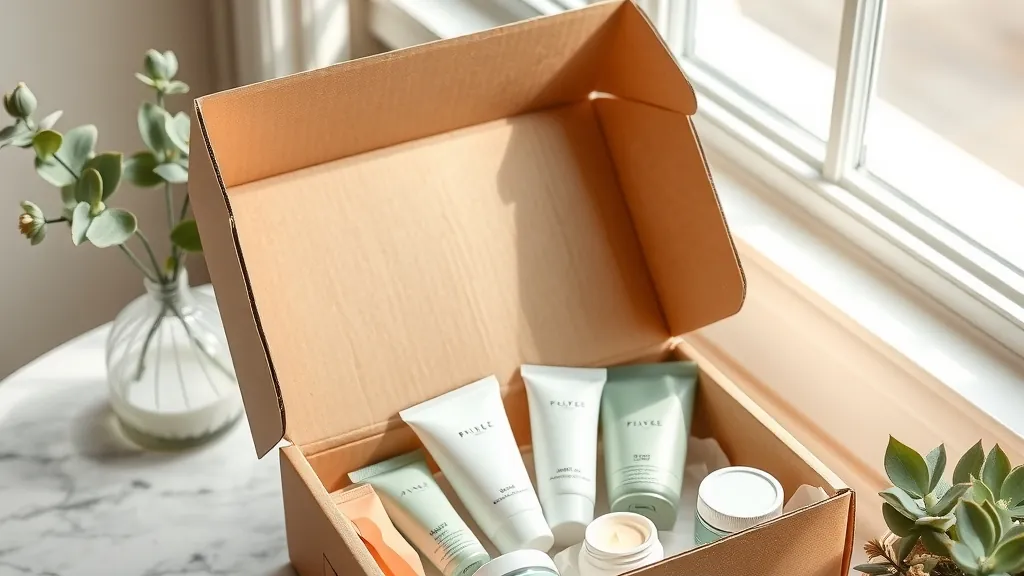
- The monthly box ships 5 to 6 items and mixes samples, deluxe samples and some full sizes
- Recent boxes have included skincare from smaller brands that publish full ingredient lists, like DEINDE and Kinship
- Skipping a month is allowed. Prepaid members get the term extended instead of losing a box
- A bi-monthly Signature box, which Birchbox says holds 5+ full-size items, suits people who already know what they like
Think twice if
- Birchbox's own subscription pages don't list a price. You only see it in the signup flow
- 'Worth up to $110' and 'up to $175 value' are retail-price ceilings, not savings
- Under its previous owner, FemTec Health, monthly shipments paused in fall 2022 and customers reported paying for boxes that never arrived
- Gift subscriptions can't be cancelled, and the terms only address refunds to say the gift fee is non-refundable
- Shipping costs aren't stated on the subscription pages I could check
Say you’ve already tried a sampling bag like IPSY and the problem wasn’t the price. It was the lack of control. You got a highlighter shade you’d never wear, a perfume vial and one skincare item you didn’t choose, and none of them had a published concentration. Birchbox is the obvious next name to look at. It was the original US sample box, it’s still running, and its main pitch now is choice: “customize every box with products you love.”
I’ve spent a lot of time on the supplier side of beauty, sourcing raw materials and watching how samples get costed into marketing budgets. So I judge a box on cost per item, how much control you have over what arrives, and whether the company will actually deliver what you paid for. Birchbox does well on the second, is murky on the first, and has a history on the third that you should know about before you prepay for a year.
This is a value and terms review, not medical or dermatological advice. Patch-test any new leave-on product before using it all over your face, and talk to a dermatologist if you’re managing a skin condition.
First, the part most reviews skip: 2022–2023
Birchbox started in 2010 at about $10 a month and more or less created the sample-box category. It was acquired by FemTec Health in 2021 for a reported $45 million or more. In fall 2022, under FemTec, monthly box shipments stopped. Birchbox posted on Instagram about “unprecedented setbacks,” and customers filed Better Business Bureau complaints about paying for boxes that never arrived. Vendors also said they hadn’t been paid.
In May 2023, as FemTec wound down, an investment firm called Retention Brands bought Birchbox’s assets. According to Retail Dive’s reporting at the time, the new owner restarted fulfillment, sent June and July 2023 boxes, and aimed to return to a normal schedule by September 2023. In the same period it raised the base membership from $10 to $15 a month.
Birchbox has been shipping again for over three years now, and recent hands-on reviews show real boxes arriving. I’m not raising this to say it’s unsafe. I’m raising it because a prepaid subscription is an unsecured loan to the company. When a subscription company fails, the people holding 12-month prepaid plans are the ones who lose money. Given the history, I’d only consider prepaying after several months of on-time boxes.
What it costs, as far as I can verify
This is my biggest complaint about Birchbox in 2026. On October 14, 2026, neither the monthly box page nor the Signature box page showed a subscription price. Both show only the value claim. The terms say Birchbox “reserve[s] the right to adjust pricing” but don’t list any prices.
Here’s what I could pin down from other sources, with where each figure comes from:
| Plan | Price (source) | What ships | Birchbox's value claim | Rough cost per item |
|---|---|---|---|---|
| Monthly, billed monthly | $25/box (third-party snapshot of the membership page, Aug 24, 2026) | 5–6 items: samples, deluxe samples, some full sizes | "worth up to $110" | $4.17–$5.00 before shipping/tax |
| Monthly, 3-month prepaid | $72 total (same snapshot) | Same, 3 boxes | — | $4.00–$4.80 |
| Monthly, 12-month prepaid | $264 total (same snapshot) | Same, 12 boxes | — | $3.67–$4.40 |
| Signature box | Not shown publicly | 5+ full-size items, every other month | "Up to $175 value" | Can't calculate |
A few notes on those numbers:
- The 12-month rate works out to $22 a box, and that’s what a reviewer at My Subscription Addiction reported paying for an April 2026 box. Two independent sources line up, which makes me fairly confident in the figures. They can still change at any time.
- Shipping is a blank. Neither the monthly box page nor the terms state a shipping charge. Check the total at checkout before you enter a card. At IPSY, a $1.99 fee added 13% to the advertised price.
- For the Signature box, I’m not going to guess. Birchbox says each of its two “marquee skincare products” is “valued above the price of the box,” which tells you the price is lower than the item’s retail value, but not what the price actually is.
Even at $22 to $25, Birchbox costs more per item than IPSY Original, which is about $3.40 per item including shipping. You’re paying extra for choice. Whether that’s worth it depends on how much of an IPSY bag you were throwing out.
What turned up in a recent box
Birchbox sends many different box variations, so no single box represents the service. The April 2026 box that My Subscription Addiction documented gives you an idea of what to expect:
- Kinship Brightwave Brightening Eye Cream, 0.13 fl oz (about 3.8 ml)
- DEINDE Skin-Strengthening Serum, 0.34 fl oz (about 10 ml)
- Ofra Long Lasting Liquid Lipstick in two shades
That’s four products in five pieces, and two of the four are skincare. Ten ml of serum is a real trial: depending on how many drops you use, it’s roughly two to four weeks of once-a-day use. 3.8 ml of eye cream lasts a few weeks too, since you only need a rice-grain amount per eye. These sizes are big enough to tell whether a product works for you.
The reviewer also flagged a math problem I want to point out. The page listed the box’s total value as $47, but the individual item values added up to about $73. When a company’s own value figures don’t add up within the same box, don’t plan your budget around the value claim. Plan it around the price you pay.
Reading the skincare like a supplier
In general, I’d rather get a sample from a small brand that publishes a full INCI list than a famous name that publishes nothing. Brands like DEINDE and Kinship make it easy to look up the full ingredient list before you apply anything. That matters because a box can still give you an active you didn’t plan for. If you’re already using a retinoid or an exfoliating acid, a new “brightening” or “strengthening” product could contain a vitamin C derivative, an acid or a retinoid ester. Look up the ingredients before you layer it into your routine.
What Birchbox doesn’t do is give you a clean dose. If you want to know you’re putting 10% niacinamide or 2% salicylic acid on your face, buy a single product from a brand that prints the percentage on the label, like The Ordinary or Paula’s Choice. A sample box is for finding textures and brands you like. It isn’t for building a routine around specific concentrations.
How the choice actually works
This is where Birchbox beats IPSY Original. You fill out a beauty profile at signup. Each month after that, you can either choose from “dozens of products” for your box or let Birchbox curate the whole thing. Third-party reviewers describe two ways to use it: choose a single sample and let the profile fill the rest, or pick most of the box yourself. Either way, you get more control than IPSY’s one choice out of five.
The Signature box is more explicit. One featured product is preset (a Cosmette plum oil, valued at $49, in the summer selection). You choose between two “marquee” skincare products, then choose four more full sizes from a list of 8+ options. If you already know your skin type and what you can tolerate, that’s real control, and full sizes mean you’re paying for product rather than trial runs.
One practical tip: if you’re sensitive to fragrance or certain essential oils, choosing every item yourself is the only reliable way to avoid them. A curated box will still contain a fragrance sample or a scented body product.
Skipping, cancelling and refunds
According to Birchbox’s terms and help content (accessed through a third-party summary, because the help center blocked my direct request):
- Monthly plans renew automatically at “the then-current subscription rate” until you cancel. Cancel from your account under Manage Subscriptions, and you won’t be billed for the next cycle.
- Prepaid plans can be cancelled anytime after billing, but stay active until the term ends. Plans with 3, 6 or 12 month commitments renew for another term of the same length unless you cancel. Put a calendar reminder before your renewal date, because a forgotten 12-month renewal costs $264.
- Skipping: On a monthly plan, you aren’t charged that month. On a prepaid plan, Birchbox extends your term by a month instead. You have to request a skip before your renewal date, and I couldn’t find a published cutoff.
- Refunds: The terms only address refunds to say the prepaid gift fee is non-refundable, and the help content says cancelling right after signup generally isn’t refundable. Missing or damaged items go to support at info@birchbox.com, with no published deadline. Report them right away anyway.
- Gift subscriptions can’t be cancelled and don’t auto-renew.
Overall, the terms are about average for the category. They’re no worse than IPSY’s flat “no refunds,” and the skip-extends-prepaid rule is fair. Given the company’s history, I’d save every order confirmation and take a screenshot when you cancel.
How it compares to the alternatives
Against IPSY Original: IPSY is cheaper ($15 + $1.99 shipping) and has the bigger, steadier operation behind it. Birchbox gives you more control over each box. If you were annoyed by IPSY picking four of your five items, Birchbox fixes that. If you mostly want cheap surprises, IPSY does it for less.
Against buying minis yourself: At around $4 to $5 per item, Birchbox is cheaper than most retail travel sizes, and the samples are often bigger than free gift-with-purchase vials. The tradeoff is a recurring charge and a smaller product selection than a retailer’s travel-size section. If you’d only want one or two items a month anyway, buying them directly from a retailer with a decent return policy is the safer route.
Against Signature vs. monthly: Choose the monthly box if you’re still figuring out what works for you. Choose Signature only after you can see the price at checkout and you know you’ll use most of four full-size products you picked yourself every other month.
Who it suits, and who should skip it
Reasonable fit:
- You’ve tried a sampling bag before and the lack of choice was the main problem.
- You like trying smaller skincare brands and will read their ingredient lists before using anything.
- You’ll go month to month, pick your items each cycle, and cancel without guilt in months the selection doesn’t interest you.
Probably skip it:
- You want the lowest price per sample. IPSY is cheaper.
- You’re building a routine around specific active concentrations.
- You were planning to prepay a year up front to save $3 a box. The savings are small compared with what you’d lose if the company stopped shipping again.
- You need to see the full price, including shipping, before you start signing up.
Verdict: 3.2 out of 5
Birchbox works again, and the choice is real. For someone who wants to pick their own deluxe samples from a mix of indie skincare and makeup, that’s worth a few dollars more than IPSY. What holds my score down is transparency. The prices aren’t on the subscription pages, the value claims have been internally inconsistent, and the company was missing deliveries as recently as 2022–2023. If you’re curious, start month to month at whatever price the signup flow shows, select your items every month, and only consider a prepaid plan after a run of boxes that arrive on time and are actually worth using.
Your questions
Is Birchbox still in business in 2026?
Yes. As of October 2026, birchbox.com is selling a monthly box and a bi-monthly Signature box. Birchbox, Inc. runs it under Retention Brands, which bought its assets in May 2023 after the previous owner, FemTec Health, wound down. US shipments paused in late 2022 and restarted in mid-2023.
How much does Birchbox cost per month?
Birchbox's subscription pages don't show a price. A third-party snapshot of its membership page from August 2026 listed $25 a month, $72 for three months prepaid and $264 for twelve months prepaid, plus tax. Confirm the price in the signup flow before paying.
How many items are in a Birchbox?
Birchbox's monthly box page says you get 5 to 6 items a month, a mix of samples, deluxe samples and full sizes. The Signature box ships every other month, and Birchbox says it includes 5+ full-size products, four of which you choose.
Can you cancel Birchbox anytime?
Monthly plans can be cancelled from your account, and you won't be billed for the next cycle. On a prepaid plan, your subscription stays active until the term you've paid for ends. Gift subscriptions can't be cancelled. Birchbox's help content says cancelling right after signing up generally doesn't get you a refund.
Is Birchbox or IPSY better?
IPSY Original is cheaper at $15 a month plus $1.99 shipping, but you choose only one of its five items. Birchbox appears to cost more, around $25 a month at last check, and lets you pick more of the box. If choosing your own skincare matters to you, Birchbox is the better fit. If the lowest price matters most, IPSY is.
SerumSavvy may earn a commission if you buy through links on this page; it never changes a verdict. This is general information, not medical advice — patch-test new products and see a dermatologist about persistent skin concerns.